Cabrinha Nomad Parawing: Your Guide to Parawinging
Freedom starts here. What parawinging is, and how the new Nomad opens up the discipline.
Parawinging is the newest and fastest-emerging way to get on the water, and the 2027 Cabrinha Nomad is built to make it feel intuitive from your very first session. If you have heard the word "parawing" and wondered what it is, how it differs from wing foiling, and what gear you need to start, this guide covers all of it, and introduces the Nomad, Cabrinha's all-round parawing.

What Is Parawinging?
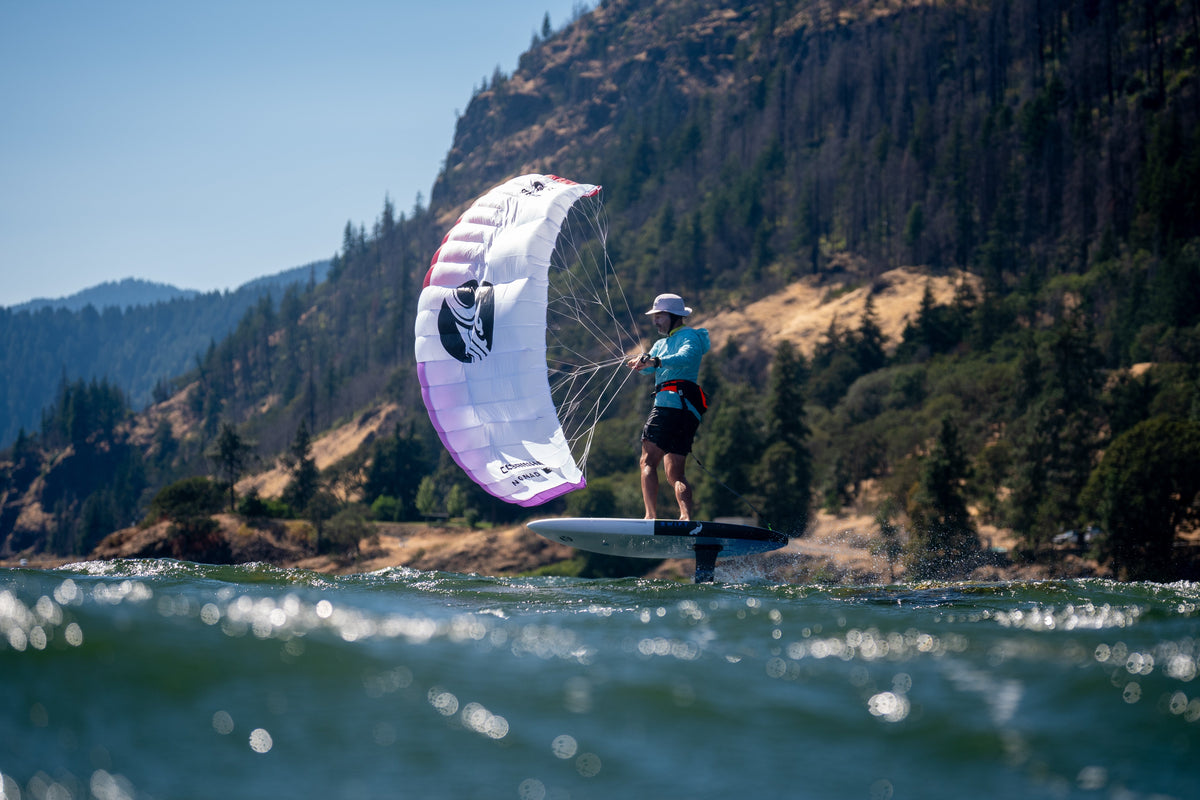
Parawinging is a wind-powered foiling discipline that uses a lightweight, packable wing, a parawing, to power you up onto a hydrofoil. Think of it as a bridge between wing foiling and downwind foiling. A parawing is a single-skin wing flown on lines from a compact bar or handle, rather than a rigid inflated wing held on a boom.
The magic is in what happens once you are up and riding. Because a parawing packs down so small, you can stash it away and ride the swell on your foil, then redeploy it when you need power again. That makes it ideal for downwind runs and open-water exploration, where carrying a big wing the whole way would be a burden.
In short: a parawing gives you the power to get foiling, then gets out of the way so you can focus on the ride. It is lighter, more packable, and more efficient upwind than many riders expect, which is exactly where the Nomad shines.
Meet the Cabrinha Nomad
The Nomad opens the door to a new way of exploring on the water. Developed in collaboration with Element Kites, the Nomad combines advanced foil kite technology with Cabrinha's performance-driven design philosophy to create a parawing that feels remarkably stable, efficient and intuitive from the very first session.
At the heart of the system is a lightweight full carbon control bar with an EVA grip, creating an incredibly direct connection between rider and wing. Every steering input feels precise and immediate, allowing you to fly the wing with confidence while reducing weight and fatigue during long sessions.
With efficient power delivery, impressive wind range and a stable airframe, the Nomad gives you the freedom to ride further and experience the unique possibilities that parawinging has to offer.
Whether you are discovering the discipline for the first time or chasing your next downwind adventure, the Nomad is designed to let you focus on the ride, not the wing.
Nomad Key Features
Ultra-light carbon control. The Nomad's control bar combines a stiff, lightweight carbon construction with an ergonomic grip, giving you direct, responsive control of the parawing without adding unnecessary weight. Designed for effortless handling, it delivers precise steering and confident control in every manoeuvre.
Single skin and inflated tip design. The single-skin design reduces weight, pack size and aerodynamic drag, while the inflated wing tips add structure and stability where it matters most. This helps maintain a clean, responsive profile and makes the Nomad easier to control through tacks and gybes.
Exceptional VMG. One of the Nomad's outstanding features is its VMG performance. Efficient profiles and carefully tuned tip geometry create an industry-leading VMG for parawings. This allows you to maintain speed while sailing efficiently upwind. The result is less energy lost to drag and more forward drive, helping you reach your destination faster, with fewer compromises between speed and angle.
V-Rib internal structure. V-Ribs along the Nomad's leading edge create a rigid framework that locks in the airfoil shape under load. By controlling tension and load paths across the wing, they help maintain a clean, stable profile for consistent performance. The V-Rib construction also enables an accordion-style pack-down, resulting in a compact, tight and ergonomic packed form.

Spliced A-lines. The spliced A-line provides a simple, secure way to stash your Nomad. It keeps the lines organised and out of the way, helping prevent tangles and making packing and deployment fast and simple.
Coloured leading edge. A contrasting colour on the leading-edge section provides instant visual distinction between the leading and trailing edges. This makes the wing easier to orient during deployment.
Every Nomad comes with a full carbon control bar and a lightweight backpack-style wing bag

Nomad Sizes and Wind Range
| Size | Weight | Wind range (knots) |
| 2.5 m | 20 to 45 | |
| 3.0 m | 520 g | 17 to 40 |
| 3.8 m | 580 g | 14 to 35 |
| 4.5 m | 680 g | 11 to 30 |
| 5.5 m | 8 to 22 |
As with any wind wing, heavier riders and lighter wind call for a larger size, while lighter riders and stronger wind suit a smaller one. Many parawingers carry two sizes to cover a broad range of conditions.

What the Nomad Is Built For
The Nomad is positioned as an all-round parawing, and its strengths show where it counts:
- Upwind and VMG: best in class, the Nomad's standout quality
- Packability: stashes down small and fast for stow-and-ride downwind laps
- Low-end power: gets you up and foiling early
- Handling: direct, confident control through tacks and gybes
- Speed: efficient forward drive without sacrificing angle
That combination makes it as suited to your first parawing sessions as it is to long downwind adventures.
See the Nomad in Action
Words only go so far. Watch Cabrinha's Jon Modica put the Nomad through its paces and talk through how it feels on the water, from getting up on foil to linking downwind runs.
The Complete Parawing Setup: Wing, Board and Foil
A parawing is one part of the setup. To get the most from the Nomad, pair it with a board and foil built for downwind and parawing riding.
The foil: Domani. The Domani foil is Cabrinha's recommended pairing for parawinging, tuned for the early lift and efficient glide that downwind and parawing riding demand.
The board: Swift or Quest. The Cabrinha Swift is a versatile Pro Carbon midlength that is exceptionally light and tuned for early lift and efficient glide, ideal for parawing and light wind foiling. For dedicated downwind riding, the Cabrinha Quest is the downwind foil board, built to catch bumps early and glide for miles, a natural match for stow-and-ride parawing downwinders.
New to how a foil works? Read our guide on how to choose the right foil, and see the full range in the 2026 Cabrinha foil board guide.

Getting Started with Parawinging
Parawinging rewards riders who already have some foiling experience, since you are managing a wing and a foil at once. If you are new to foiling, wing foiling or a lesson is a great way to build the balance and foil control first. From there, the Nomad's stability, low-end power and intuitive handling make the step into parawinging smoother than most expect.
Start in steady, moderate wind, learn to deploy and stash the wing on the water, and build up to linking downwind runs. The freedom of packing the wing away and riding the swell is what hooks most people.
What is a parawing?
A parawing is a lightweight, packable single-skin wing flown on lines from a compact bar or handle, used to power a rider onto a hydrofoil. Once up and riding, it can be stashed away so you can ride the swell on the foil and redeploy when you need power.
What is the difference between parawinging and wing foiling?
Wing foiling uses a rigid inflated wing held on a boom the whole time. Parawinging uses a packable line-flown wing that you can stow away once foiling, which makes it especially good for downwind riding and open-water exploration.
Is parawinging hard to learn?
It is easier if you already foil, since you are combining wing control and foil control. The Nomad is designed to feel stable and intuitive from the first session, which helps, but some foiling experience makes the learning curve much smoother.
What size parawing should I get?
It depends on your weight and the wind. The Nomad comes in 2.5, 3.0, 3.8, 4.5 and 5.5 m. Bigger sizes suit lighter wind and heavier riders; smaller sizes suit stronger wind. Many riders own two sizes.
What gear do I need to parawing?
A parawing like the Nomad, a foil board, and a hydrofoil. For the Nomad, the Domani foil and the Swift or Quest boards are the recommended pairings for parawing and downwind riding.
What makes the Cabrinha Nomad good for downwinding?
Its industry-leading VMG, excellent packability, stable airframe and efficient low-end power let you get foiling early, ride upwind efficiently, and stash the wing to ride the swell, which is exactly what downwind parawinging is about.