How Does a Hydrofoil Work? Choosing the Right Foil
From how a foil flies to building your setup: front wings, stabilizers, masts and boards explained.
The first time a hydrofoil lifts your board clear of the water, it feels like magic. Understanding how a hydrofoil actually works, and how each part of the foil shapes the ride, takes the mystery out of choosing the right foil. This guide starts with the basics, then walks through how to choose the right foil for your discipline, part by part, using the modular Cabrinha Union system.
When you are ready to build one, the Cabrinha Union Foil Build Guide lets you configure a complete setup from front wing to board.

How Does a Hydrofoil Work?
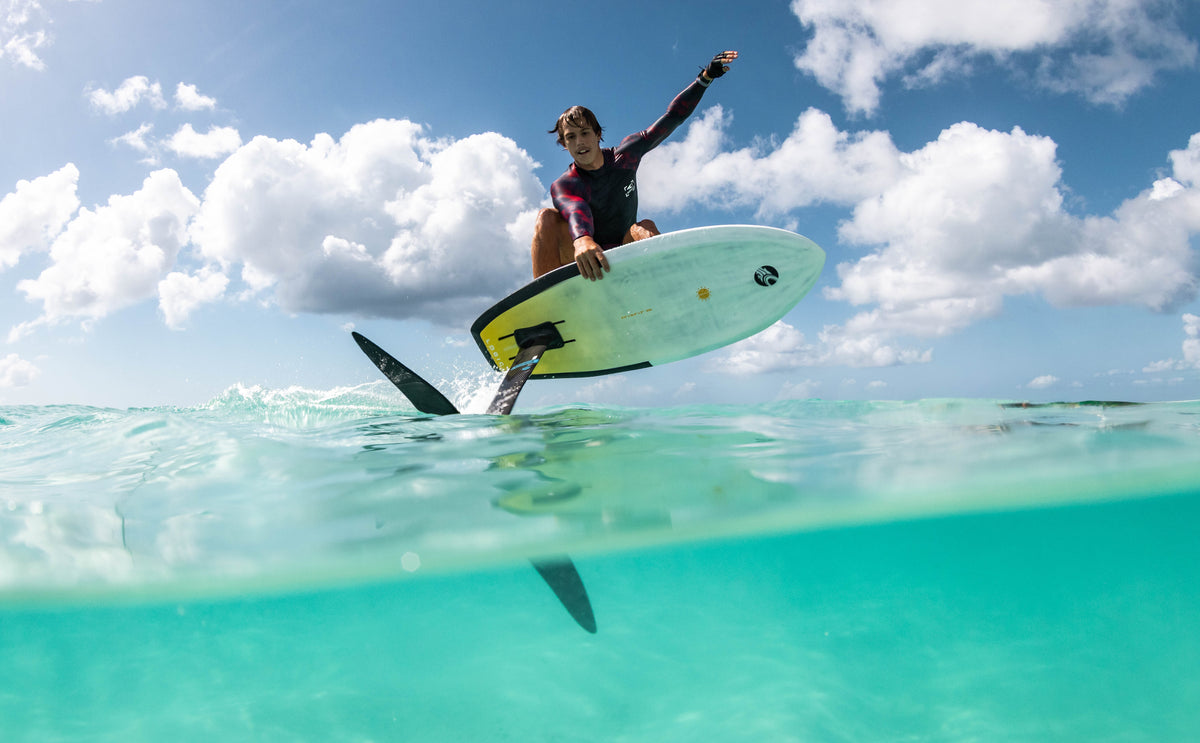
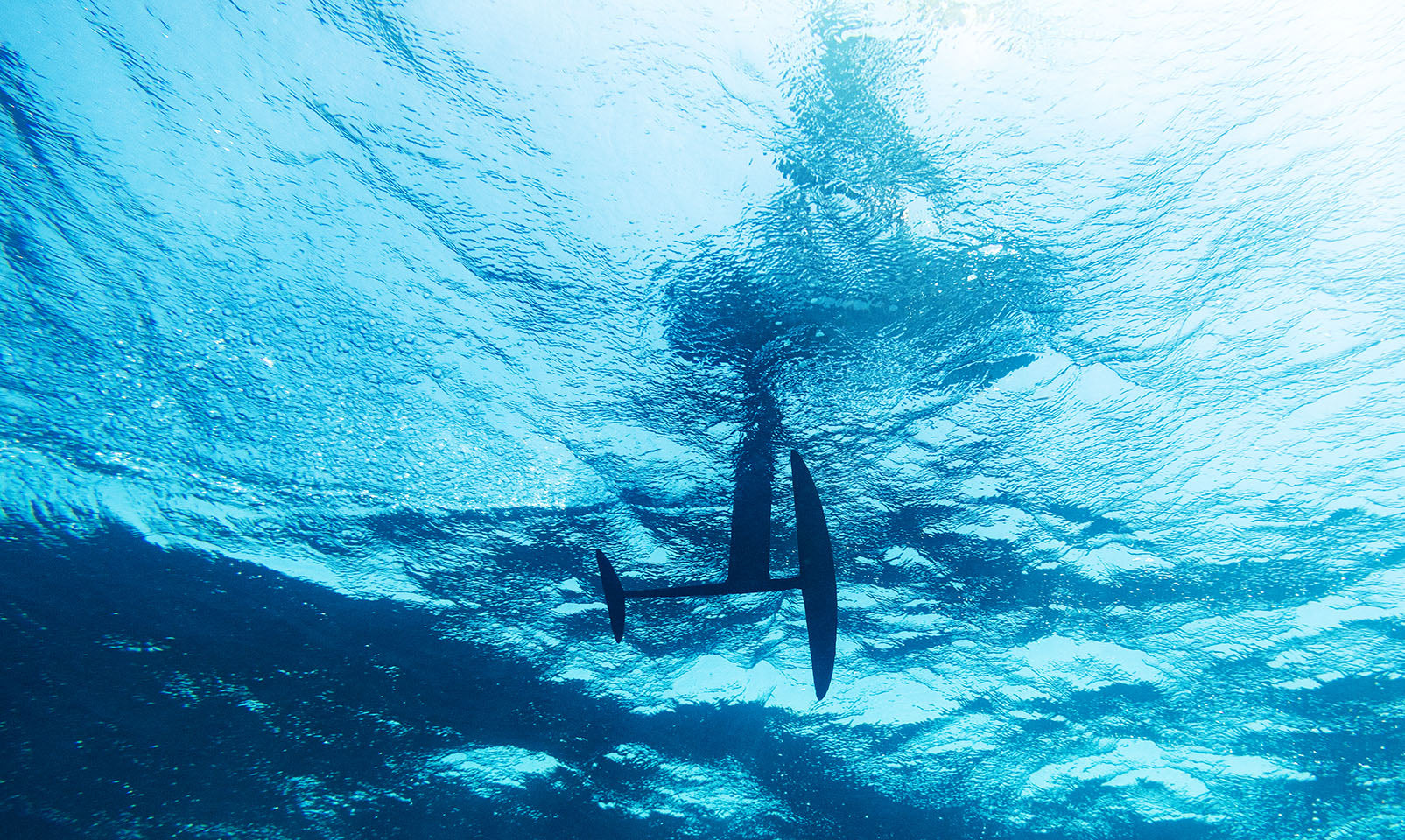
A hydrofoil works on the same principle as an aircraft wing, just in water instead of air. As your board picks up speed, water flowing over the curved front wing creates a pressure difference that generates lift. Once that lift is strong enough, it raises the board and rider clear of the surface, leaving only the slim mast and foil underwater.

With the hull out of the water, drag drops dramatically. That is why foiling feels so smooth and fast and needs so little power to keep going. The rear stabilizer balances the foil in pitch so the ride stays level and controllable rather than pitching up or diving. Change any one of those parts, the front wing, the stabilizer, the mast, or the board, and you change how the whole thing flies. That is exactly why a foil is best understood as a system, which is what the rest of this guide covers.
Start With the Discipline
Before any spec, answer one question: what are you riding? Wingfoiling, kite foiling, downwind, and prone surf foiling all ask different things from a foil.
1. The Front Wing: The Heart of the Setup
The front wing is the most important choice. It defines lift, glide, speed, and how the foil turns. The main trade-off is aspect ratio and area.
High aspect, more efficient. A longer, thinner wing glides further, holds speed, and pumps efficiently, ideal for distance, light wind, and downwind. In the Cabrinha range, the Prestige is the high-aspect foil built for efficiency and easy lift.
High efficiency, more maneuverable. A shorter, mid aspect wing turns tighter and feels more playful, better for carving and surf-orientated riding. The Whippit is the compact carver for fast, dynamic turns.
Fast and lively for freestyle. Some riders want quick lift, speed, and stable touchdowns for jumps and tricks. The Rebound delivers fast lift and the explosive pop suited to kite & wing foil freestyle & big air.
Sizing rule of thumb: bigger area lifts earlier and at lower speeds (better for light wind, heavier riders, and learning), smaller area is faster and looser (better for strong conditions and experienced riders).

2. The Stabiliser: Tuning Feel and Control
The stabiliser, or tail wing, controls pitch stability and how locked-in or loose the foil feels. A larger stabilizer adds stability and a planted, predictable ride. A smaller one frees the foil up for tighter, more responsive turns.
The Union Stabiliser comes in 160, 180, and 200 sizes, each with a different profile, so you can fine-tune the same front wing toward stability or playfulness. Do not be afraid to experiment here. Swapping a stabiliser is one of the easiest ways to change how a setup rides.
The Tweaker Stabilisers come in a 140 & 160. These need to be used with the tweaker fuselages, that come in a 340 or 390 in size. The tweaker setup offers much more customisation and is generally only recommended for advanced riders.

3. The Mast: Length and Stiffness
Mast choice is about length and stiffness.
Length: shorter masts are more forgiving and easier in shallow water and gusty conditions, while longer masts give more clearance in chop and swell and more room to lean into turns. Beginners often start shorter and move longer as they progress.
Stiffness: a stiffer mast transfers your input directly to the foil with less flex and energy loss, which means sharper, more connected control. The Union Carbon Mast offers a high-modulus build with a reduced cross-section for stiffness and low drag, and the Union Carbon Apex Mast takes it further with an ultra-thin 14mm profile for maximum stiffness and minimal drag.

4. The Board: Match It to the Ride
The board ties it together. Choose by discipline first, then by volume. More volume and length make takeoffs and starts easier, which helps in light wind, for heavier riders, and when learning. Less volume is more compact and reactive once flying.
Cabrinha's foil boards span the disciplines: the Code for all-around wingfoiling, the Swift for light wind, the Quest for downwind, the Bump for prone surf foiling, and the Logic for kite, pump & tow. See the full breakdown in the 2026 Cabrinha foil board guide.

Choosing the Right Foil as a Beginner
If you are just starting out, bias every choice toward stability and early lift. That means a larger, higher-area front wing that lifts at low speed, a larger stabilizer for a planted feel, a shorter mast that is easier to control, and a board with enough volume for stable takeoffs. The Cabrinha Code paired with a high-area front wing and a larger stabilizer is a forgiving, confidence-building starting point. As your balance and speed improve, you can size down the wing, lengthen the mast, and tune the stabilizer for a livelier ride, all without replacing the whole foil.
Putting It All Together
Here is the simple version. Pick your discipline. Choose a front wing for the balance of glide versus turning you want, sized for your weight and conditions. Add a stabilizer to tune stability versus looseness. Pick a mast length and stiffness for your level and water. Match a board to the discipline and your need for early takeoff. Because every part runs on the same Union platform, you can start with one setup and evolve it as you progress, swapping single components instead of buying a whole new foil.
Ready to build yours? Use the Cabrinha Union Foil Build Guide to configure a complete setup, or browse the Union foil kits for ready-made combinations.
How does a hydrofoil work?
A hydrofoil is a wing that moves through water. As the board speeds up, water flowing over the curved front wing generates lift, and once that lift is strong enough it raises the board clear of the surface, leaving only the mast and foil submerged. With the hull out of the water, drag drops sharply, so you glide faster and smoother with far less power. The stabilizer keeps the foil balanced and level.
How do I choose the right foil for my weight?
Heavier riders generally need more front wing area to lift early and stay stable at lower speeds, while lighter riders can ride smaller wings for a faster, looser feel. Conditions matter too: size up for light wind, size down for strong wind.
What size foil wing should a beginner use?
Beginners are best served by a larger, higher-area front wing that lifts early and at low speed, paired with a larger stabilizer for stability and a shorter mast for control. As you progress, you can move to smaller, faster wings and longer masts.
What is the difference between a high-aspect and a low-aspect foil wing?
High-aspect wings are long and thin, favoring glide, speed retention, and efficient pumping, which suits distance and light wind. Low-aspect wings are shorter and turn more tightly, favoring carving and surf-style riding.
Can I mix and match Cabrinha Union foil components?
Yes. The Union system is modular, so front wings, stabilizers, masts, and boards are designed to work together. You can change one component at a time to dial in the ride rather than replacing the whole foil.