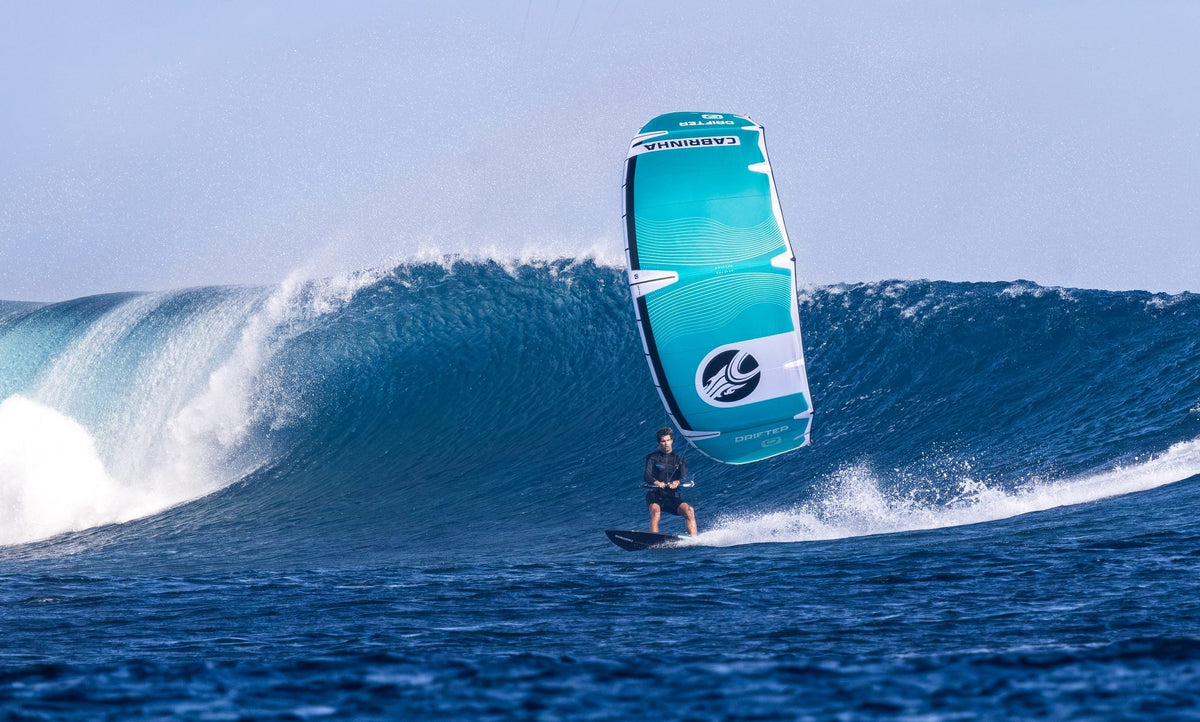
Article: Wing Foil Wave Riding: How to Start Riding Waves with a Wing
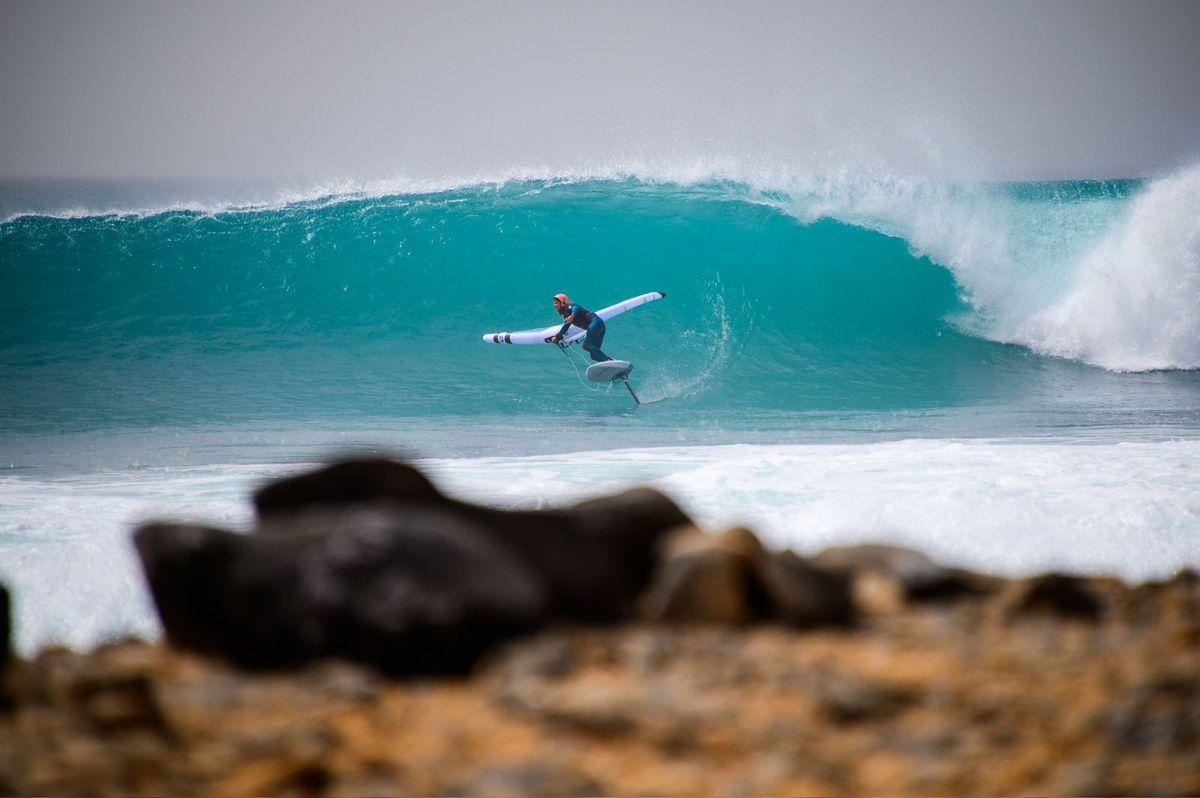
Wing Foil Wave Riding: How to Start Riding Waves with a Wing

Cabrinha team rider Elena Moreno has been surfing since she was 12. Today she rides waves on the GWA Wingfoil World Tour from her home in the Canary Islands, and took her first tour win in the heavy surf of Ponta Preta, Cape Verde. In this guide, she shares how to take your wing foiling from flat water into the waves.
Once you feel comfortable riding your wing foil, learning wing foil wave riding is the next exciting step. It’s where wing foiling opens up a whole new experience, allowing you to use the energy of the wave rather than relying on the wing for power.
The key is learning to let the wave provide the power while keeping your wing under control.

Start with small, clean waves and moderate wind conditions. Before approaching the wave, use your wing to build enough speed to keep the foil flying comfortably.
As the wave begins to push you, grab the neutral handle with one hand and allow the wing to flag out. This keeps the wing out of the way so you can concentrate on riding the wave and controlling the foil.
Stay relaxed, keep your knees slightly bent and look where you want to go. Rather than making aggressive turns, focus on smooth movements and try to follow the natural energy of the wave.

Finding the Right Position on the Wave
One of the most common mistakes when learning to wave ride is staying too far away from the face of the wave.
When you’re too far out, you can lose speed because the wave isn’t providing enough energy. If you’re not yet confident or quick enough to grab the wing and return to a powered position, the foil can begin to drop and you may come off foil completely.
There is a simple exercise that can help you become more comfortable with this, and you don’t even need waves to practise it.

Practise Going from Powered to Neutral
On flat water, practise transitioning between powered riding and neutral riding.
Build up some speed, grab the neutral handle and allow the wing to flag out. Then quickly return to the powered handle and regain power before the foil begins to drop.
Repeat this until the movement starts to feel natural.
Being able to move confidently between these two positions will make a huge difference when you begin riding waves. Instead of worrying about what the wing is doing, you’ll be able to focus much more of your attention on the wave and your foil.

Don’t Go Too Deep Too Soon
Another common mistake is almost the exact opposite: riding too deep into the face of the wave too soon.
At this stage of your progression, you’re often still using a relatively large and stable foil. When that foil suddenly receives a lot of energy from the wave, it can accelerate and lift very quickly, potentially launching you upwards and throwing you out of the wave.
The best approach is to move towards the face of the wave progressively.
Start by riding a little closer to the pocket each time. Pay attention to how much energy the wave is giving you and, importantly, how your foil reacts to that extra energy.
As your confidence grows, you can gradually begin riding deeper and using more of the wave’s power.

When Is It Time for a Smaller Foil?
Once you feel comfortable enough to start taking a few more risks and pushing deeper into the wave, it may also be a good indication that you’re ready to go down a size in your foil.
A smaller foil can handle more speed and energy from the wave while providing a more responsive and controlled ride.
There’s no need to rush this progression. Developing good control on a larger, more stable foil first will give you a solid foundation before moving onto something smaller and more manoeuvrable.
If you’re not sure which size to choose, our guide to choosing the right foil explains how front wing size changes lift, speed and control.

Enjoy the Progression
Wave riding is something that develops with every session.
Start with manageable conditions, practise transitioning between powered and neutral riding, and gradually explore more of the wave as your confidence increases.
Most importantly, keep practising and enjoy the learning process.
It’s a beautiful journey, and every wave teaches you something new.

Elena’s Wing Foil Wave Riding Setup
For waves, Elena rides the Cabrinha Mantis wing, a Link board in 42L and a Fusion H-Series HS650 front wing.
The Mantis is Cabrinha’s all-round wing for freeride, waves and big air. To compare boards for different styles of riding, see our 2026 foil boards guide. You can also read Elena’s story of her first Défi Wing.

What does flagging the wing mean?
Flagging the wing means letting go of the back handle and holding the wing by a single front or neutral handle, so it trails behind you like a flag with no power. It’s how you ride a wave without the wing pulling you around.
What wind is best for wing foiling in waves?
Side-shore wind is ideal, because you can ride along the wave and wing back out easily. You only need enough wind to get foiling and back out through the waves comfortably. Avoid offshore wind while you are learning.
What size foil should I use for wave riding?
Start on the foil you already feel comfortable with, which is usually a larger, more stable front wing. As you start riding closer to the pocket, a smaller front wing handles the extra speed better and turns more easily. Our foil guide explains the trade-offs.
Do I need a special wing for waves?
No, but it helps to ride a wing that stays stable and neutral when you flag it out, so it doesn’t pull on your arm while you surf the wave. The Cabrinha Mantis is an all-round wing built for freeride, waves and big air.