Skip to content

Cart

Your cart is empty

Cabrinha team rider Hannah Whiteley performing a kitesurfing trick, grabbing her board while skimming the water with a red Cabrinha Switchblade kite.

CABRINHA GUIDES

Kitesurfing for Beginners

Your complete starting point for learning to kitesurf. Discover the equipment, essential skills and everything you need to begin your journey on the water.
Cabrinha team rider Alberto Rondina kitesurfing across the water on a beautiful sunny day.

What Is Kitesurfing?

Kitesurfing is an exciting water sport that combines the freedom of surfing with the power of the wind. Using a specially designed kite, a control bar, a harness and a board, riders harness the wind to glide across the water.

Unlike traditional surfing, which relies on waves, kitesurfing uses wind power to generate movement. This means you can ride across flat water, explore coastlines, carve through waves and, as your skills develop, experience the thrill of jumping and aerial tricks.

One of the best things about kitesurfing is its versatility. Whether you're looking for a relaxing cruise across turquoise water or an adrenaline-filled adventure, the sport offers something for every riding style. With professional instruction and the right equipment, beginners can gradually build the skills and confidence needed to enjoy time on the water.

Kitesurfing vs. Kiteboarding: Is There a Difference?

No! Kitesurfing and kiteboarding are two names for the same sport. The term kiteboarding is more commonly used in North America, while kitesurfing is widely used in Europe and Australia.

Whichever name you use, the fundamentals are the same: learning to control the kite, understanding the wind, maintaining balance and using the kite's power to ride across the water.

Cabrinha team rider Alberto Rondina performing an aerial board grab while kitesurfing with a red Cabrinha Switchblade against a blue sky.

Essential Kitesurfing Equipment

Getting started with kitesurfing requires a few essential pieces of equipment. Each plays an important role in helping you learn, control the kite and stay safe on the water.

The Kite

Your kite generates the power that pulls you across the water. Beginners generally benefit from stable, easy-to-control inflatable kites with good depower and relaunch capabilities.

The Control Bar and Lines

The control bar allows you to steer the kite and manage its power. It also incorporates important safety systems, including a quick-release mechanism.

The Kiteboard

Most beginners start with a twin-tip board. Its symmetrical shape allows you to ride in either direction, while a larger board generally makes learning easier.

The Harness

A harness connects you to the kite through the control bar's chicken loop, transferring much of the kite's pull to your body rather than your arms.

Essential Safety Equipment

Depending on conditions and local requirements, you'll also need a suitable helmet, impact or flotation vest, and appropriate wetsuit or sun protection.

Beginner tip: Take lessons before buying your first setup. A qualified instructor can help you choose equipment suited to your weight, local wind conditions and skill level.

Kitesurfing instructor giving a thumbs-up to a student riding past during a beginner kitesurfing lesson.

YOUR JOURNEY STARTS HERE

Your First Kitesurfing Lessons

Every great kitesurfer starts with the fundamentals. Professional lessons with a qualified instructor help you develop the skills, confidence and safety awareness to progress from the beach to your first rides.

01

Beach Basics

Learn about wind direction, safe launch locations, equipment setup and essential safety systems before flying a kite.


02

Kite Control

Practise steering, controlling power and safely launching and landing the kite under your instructor's supervision.

03

Body Dragging

Take your kite skills into the water. Learn to move through the water using kite power and practise recovering your board.

04

First Water Starts

Bring everything together as you learn to position your board, generate controlled power and make your first short rides.

UP NEXT

Before You Fly: Understand the Wind

Before you take control of a kite, it's important to understand how the wind works. Wind direction, wind strength and the wind window all influence how your kite behaves and how much power it generates.

Let's explore these essential concepts so you can arrive at your first lesson with a better understanding of what to expect.

Three Cabrinha Switchblade kites flying above kitesurfers riding across turquoise water on a sunny day.

Understanding the Wind

Wind is what powers kitesurfing, but understanding how it behaves is essential for staying safe and progressing confidently.

Wind Direction

Onshore wind blows from the water toward the beach. Offshore wind blows away from the beach and can carry riders out to sea, making it unsuitable for beginners. Side-shore wind blows roughly parallel to the coastline and is often preferred for lessons, depending on the location and conditions.

The Wind Window

The wind window is the three-dimensional area where your kite can fly. Different positions within this window generate different amounts of power.

A kite positioned near the edge of the wind window generally produces less pull, while moving the kite through the power zone can generate significantly more force.

Wind Speed

Wind speed is usually measured in knots. The appropriate conditions depend on your weight, kite size, experience and local environment.

Beginner tip: Always check the forecast, understand local hazards and learn how to assess wind conditions with a qualified instructor before heading onto the water.

Understanding the Wind Window

Explore how a kite's position in the wind window affects its power.

12 • Zenith 9 3 WIND WINDOW HIGHER POWER Simplified front view • not to scale
12 o'clock — Zenith

The kite is above you at the upper edge of the wind window. It generally produces less horizontal pull but can still generate lift.

The green rainbow marks the low-power edge of the wind window, while the orange area represents the higher-power zone. The kite's position, movement and wind conditions all affect how much pull it generates.

Wind Direction

Wind direction determines how safely you can launch, ride and return to shore. Explore the three main conditions.

BEACH WATER

Side-shore / Side-onshore

Preferred for learning

Wind blowing along the beach or slightly towards it. These are generally the best conditions for learning at a suitable spot.

BEACH WATER

Onshore

More challenging

Wind blowing directly towards the beach. Launching and getting away from shore can be more difficult.

BEACH WATER

Offshore

Not for beginners

Wind blowing from land out to sea. It can be gusty and may carry riders away from shore.

Wind Strength

Steady wind of roughly 12 to 22 knots is a typical range for beginner lessons, depending on the location and equipment.

Avoid gusty conditions. Choose flat or small water with plenty of space on the beach and downwind. Always follow your instructor's assessment of local conditions.

Safety First

Safety starts before you enter the water. Learn your equipment, understand your surroundings and practise with a qualified instructor.

01

Inspect Your Equipment

Check your kite for tears, lines and bridles for wear, valves for leaks, and bar and harness connections for damage. Never launch damaged equipment.

02

Know Your Safety Systems

Learn how your quick release, leash release and safety-line system work. Practise using them with an instructor and check them before riding.

03

Check Conditions & Location

Check the wind forecast, gusts, tides, currents, obstacles and local restrictions. Avoid unsuitable conditions, especially offshore winds.

04

Launch & Land Safely

Use a trained helper, double-check line connections and keep a clear area downwind. Never launch near people, buildings or power lines.

05

Protect Yourself & Others

Wear a suitable helmet and appropriate impact or flotation protection. Keep clear of other water users and learn the local right-of-way rules.

06

Prepare for Emergencies

Learn self-rescue with an instructor, avoid riding alone, stay within a safe distance of shore and know how to call for help.

YOUR PRE-SESSION CHECKLIST

Before Every Session

A few essential checks before you launch can help prevent problems on the water.

✓

Check the wind forecast, gusts and local conditions

✓

Inspect your kite, lines, bar, harness and connections

✓

Test your quick release and safety systems

✓

Check your launch area and identify hazards

✓

Wear suitable safety equipment and check its fit

✓

Confirm your kite size suits the conditions and your ability

If anything is damaged, uncertain or unsafe, do not launch. Ask a qualified instructor for guidance.

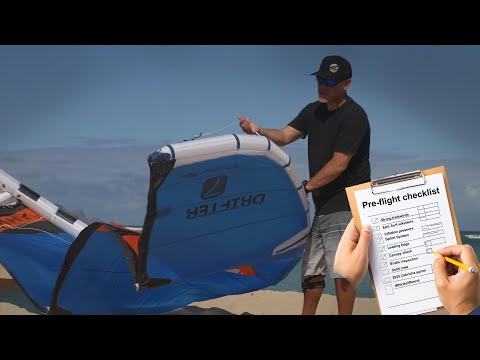
Safety Starts Before You Launch

A proper pre-flight check is an essential part of every kitesurfing session. Watch Cabrinha's guide to checking your setup before heading onto the water.

Finding Your Perfect Kite Size

Kite size isn't one-size-fits-all. Your weight, the wind conditions and your experience all influence the right choice. Here's what to consider before choosing your kite.

01

Your Weight

Heavier riders generally need more kite power than lighter riders in the same wind conditions. Your weight is an important starting point when choosing a kite size.

02

Wind Strength

Lighter winds generally call for larger kites, while stronger winds require smaller kites. Always consider gusts, not just average wind speed.

03

Your Experience

Beginners need predictable handling and appropriate power. An instructor or Cabrinha Dealer can help you select a suitable kite for your ability, conditions and riding location.

CABRINHA GUIDE TOOLS

Find Your Kite Size

Explore our recommended Cabrinha kites for beginners. Select your kite, enter your weight and wind conditions, and discover which size could be right for you.

Your Details

Enter the forecast wind speed for your riding location. Winds of 12–22 knots are generally recommended for beginners, although suitable conditions vary by location and instructor guidance. Always check wind gusts as well.

Your Results

Choose your kite, rider weight and wind speed to explore the available sizes.

This calculator provides an estimated kite size for general guidance only. It does not assess whether conditions are safe to ride. Wind gusts, board size, rider experience, local conditions and equipment all affect kite suitability. Beginners should always seek guidance from a qualified instructor or Cabrinha Dealer before selecting equipment.

BEGINNER TIP

Never choose a kite based on size alone. Kite model, board size, wind conditions and rider ability all matter. Always follow an instructor or Cabrinha Dealer's guidance and the manufacturer's recommended wind range.

Choosing Your First Kiteboard

A twin tip is the ideal starting point for most new kitesurfers. It can be ridden in both directions without changing your stance, making it easier to concentrate on kite control, balance and your first water starts.

01

Start With a Twin Tip

Twin tips are versatile, forgiving and easy to progress with. A freeride twin tip is generally the best choice for learning and building confidence.

02

Choose the Right Size

A slightly larger board offers more surface area, helping you get moving in lighter winds and making your first water starts easier. Rider weight, wind strength and experience all affect sizing.

What Size Twin Tip Do You Need?

Your weight is a useful starting point when choosing a twin tip. Beginners often benefit from a slightly larger board, which helps with early planing, stability and learning to ride upwind.

Rider Weight Lighter Wind
(12–16 knots)
Stronger Wind
(18–28 knots)
Under 60 kg 136–140 cm 133–136 cm
60–75 kg 141–145 cm 136–140 cm
75–90 kg 145–148 cm 138–141 cm
Over 90 kg 148–152 cm 141–145 cm

These are general starting points, not manufacturer-approved sizing recommendations. Board width, wind strength and riding conditions also affect the ideal size. Ask your instructor or Cabrinha Dealer for advice.

BEGINNER TIP

Avoid choosing a board purely by its length. Width, rider weight and local wind conditions matter too. Ask your instructor or Cabrinha Dealer to help you select the right size.

Kitesurfing instructor supervising beginner students practicing on the water during a lesson.

Common Beginner Mistakes

Learning to kitesurf is an exciting journey, but building good habits from the beginning makes all the difference. Here are five common mistakes to avoid as you develop your confidence on the water.

1. Heading Out in the Wrong Conditions

Not every windy day is a good day to learn. Strong gusts, offshore winds, changing weather and crowded beaches can make conditions challenging. Learn to assess the forecast, understand your local spot and choose conditions appropriate for your experience.

2. Choosing Equipment That Doesn't Suit You

A kite that's too powerful or a board that's too small can make learning unnecessarily difficult. Your weight, wind strength and skill level all influence the equipment you should use. The right setup helps you develop control and progress with confidence.

3. Pulling Too Hard on the Bar

One of the most common beginner habits is pulling the bar in too far when trying to generate power. This can oversheet the kite, reducing its ability to fly efficiently. Focus on smooth, controlled movements and understanding how bar position affects the kite.

4. Looking Down Instead of Where You're Going

When learning water starts, it's natural to focus on your feet and board. But keeping your head up and looking in the direction you want to travel helps improve balance, body position and control.

5. Rushing Your Progression

Everyone learns at a different pace. Trying to ride in challenging conditions, jump or attempt new manoeuvres before mastering the fundamentals can lead to unnecessary risks. Take time to develop consistent kite control, safe launching and landing, body dragging and reliable water starts.

The Best Advice? Learn From the Experts.

Good technique and sound judgement are just as important as the equipment you ride. Always seek guidance from a qualified kitesurfing instructor, and speak to your local Cabrinha Dealer for advice on choosing the right gear for your weight, ability and riding conditions.

Kitesurfing instructor watching students practice kite control on the water during a beginner lesson.

Frequently Asked Questions

Answers to some of the most common questions.
How many lessons do I need to start kitesurfing?

The number varies depending on wind conditions, confidence and previous experience. A qualified instructor can help you progress safely at your own pace.

Do I need to be strong to kitesurf?

You don't need exceptional strength. A properly fitted harness transfers most of the kite's pull through your body, so technique and control are more important than muscle power.

Is kitesurfing difficult to learn?

Kitesurfing takes practice, but beginners can learn the fundamentals through professional lessons. Most people start with kite control and safety before progressing to riding on the water.

Can I teach myself to kitesurf?

Learning to kitesurf without professional instruction is strongly discouraged. Kites can generate significant power, and incorrect handling can lead to serious accidents. Lessons with a qualified kitesurfing instructor teach you essential skills, including understanding the wind window, launching and landing safely, using your quick-release system and performing self-rescue. Professional instruction is the safest way to begin.

How much wind do you need to kitesurf?

Beginner lessons typically take place in steady winds of around 12–22 knots, depending on local conditions, rider weight and equipment. Experienced riders can also enjoy lighter winds using specialist equipment, such as the Cabrinha Moto XL Apex or a kite foil. Always consider wind gusts and follow your instructor's guidance when assessing suitable conditions.

What size kite should a beginner get?

The right kite size depends on your weight, wind strength, board size and experience. During lessons, your instructor will select suitable equipment for the conditions. When you're ready to purchase your own kite, explore our kite size calculator above for an initial estimate, then consult your instructor or local Cabrinha Dealer. Many riders eventually build a two-kite quiver to cover a wider range of wind conditions.

Is kitesurfing dangerous?

Like any adventure sport, kitesurfing involves risks, particularly when equipment is used incorrectly or conditions are unsuitable. However, proper instruction, suitable equipment and good safety practices can significantly reduce those risks. Always learn with a qualified instructor, understand your safety and quick-release systems, check weather conditions, wear a helmet and suitable impact or flotation protection, and avoid riding alone.

Do I need to be a strong swimmer to kitesurf?

You don't need to be an expert swimmer, but you should be a competent swimmer who feels confident and comfortable in open water. Learning involves body dragging, water starts and occasionally being separated from your board, so basic swimming ability and water confidence are essential. Wear suitable flotation protection as recommended by your instructor, and always learn in supervised conditions.

What kitesurfing gear should I buy first?

Start with professional lessons, where the school will usually provide the kite, board and other essential equipment. Once you're progressing, you might begin with personal items such as a properly fitted harness, wetsuit and helmet. When you're ready for your own setup, you'll typically need a kite, control bar, twin-tip board and appropriate safety equipment. Your instructor or local Cabrinha Dealer can help you choose gear suited to your ability, weight and local conditions.